

Kinds of storage facilities
There are two ways of storing large quantities of natural gas underground: cavern and porous storage facilities. Both are located at depths of between 500 and 2,500 metres.
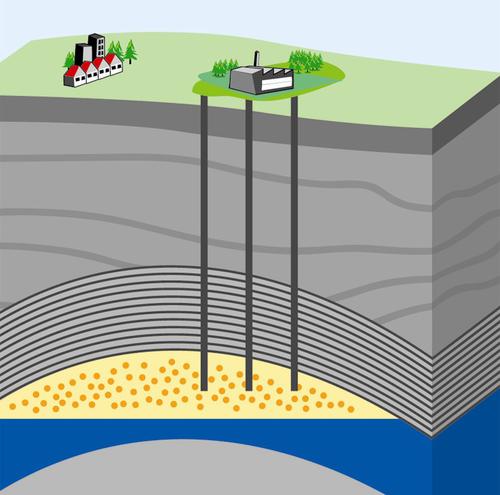
Pore storages: Former natural gas reservoirs
Porous storage facilities make use of the natural porosity and permeability of sandstone strata. The natural gas is stored in the pores and fissures of the sandstone, which absorb the gas like a sponge and discharge it again when required.
Both depleted gas reservoirs and aquifers are suitable for this form of storage. Aquifers are water-bearing rock formations where the water is forced out by injecting gas.
These porous storage facilities have proved their impermeability over millions of years. Impermeable surface layers prevent any gas from escaping to the surface and water-bearing layers form a natural barrier below the porous sandstone.
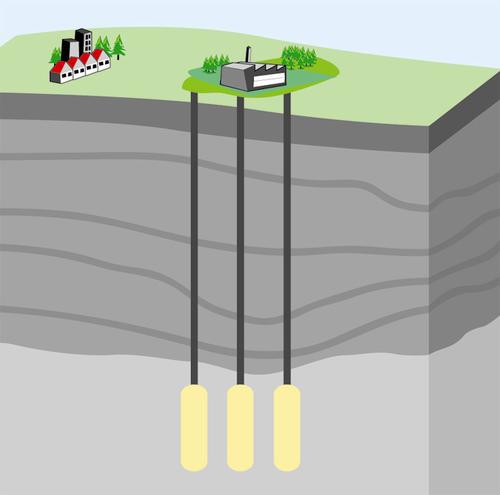
Caverns: Artificially created cavities in salt formations
In contrast to porous storage facilities, caverns are artificial cavities in salt seams deep underground. These caverns are created through controlled dissolution of the salt in water (leaching out). They can be up several hundred metres high and up to 80 metres in diameter. The physical properties of the salt seams ensure these caverns are naturally impermeable. Besides compensating for seasonal fluctuations, caverns are mainly used to cover short-term peaks in gas consumption.
The demands of reservoir technology require a certain amount of gas to be always present in a storage facility. This so-called cushion gas is needed to guarantee the minimal storage pressure required for gas injection and withdrawal, and the stability of the cavern.